

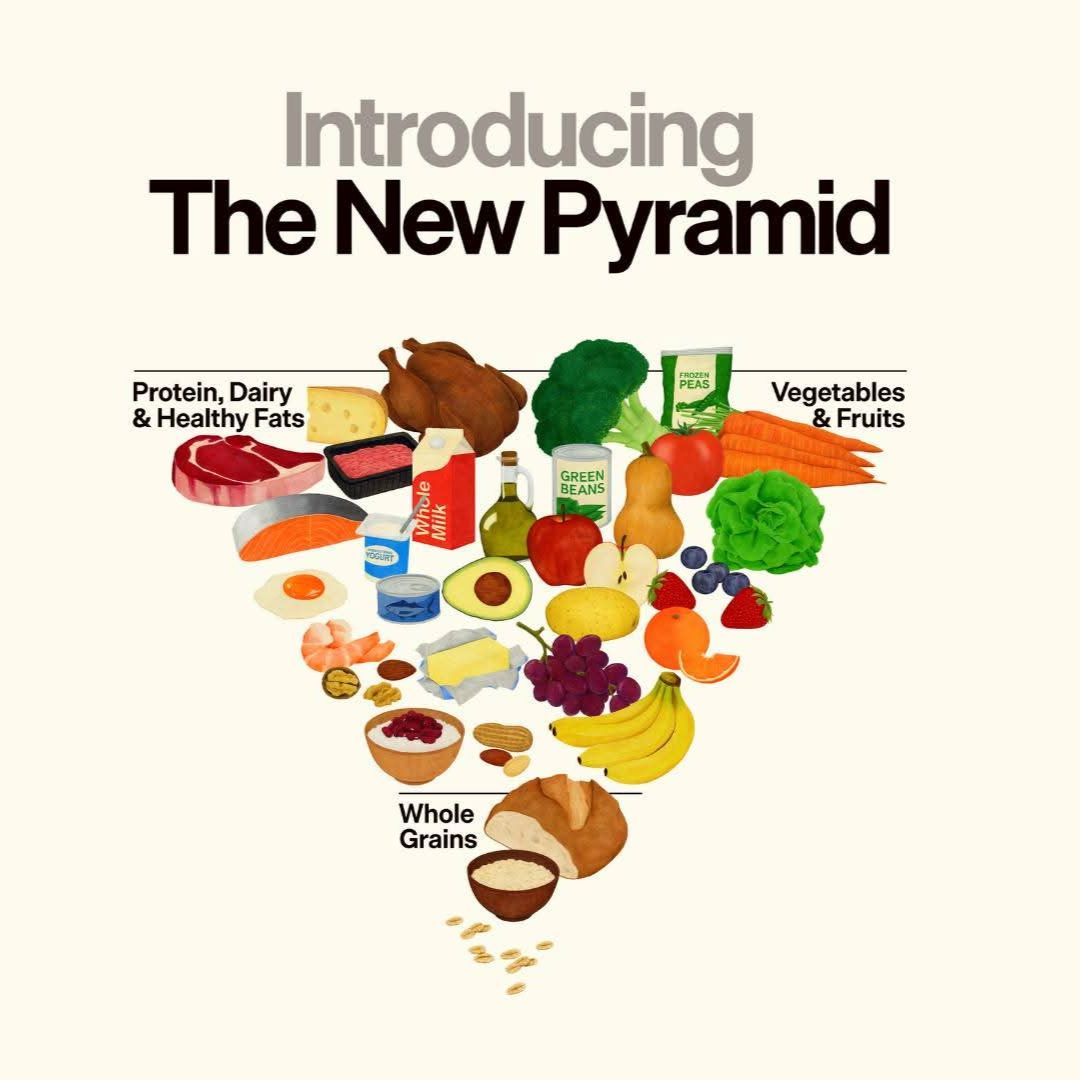
A Closer Look at the New 2026 Dietary Guidelines
Every five years, the federal government updates the Dietary Guidelines for Americans. These guidelines are intended to reflect current nutrition research and offer broad guidance on what a healthy way of eating might look like for most people.
The newest update has sparked a lot of discussion. Some changes feel like long-overdue progress, while others raise important questions. As with any generalized nutrition advice, there’s value, and also plenty of nuance.
Let’s take a closer look at what’s new, what’s encouraging, what’s less clear, and how to think about these guidelines in a way that actually supports real people and real lives.
What’s New in the 2026 Dietary Guidelines
While the core message of “eat well to support health” hasn’t changed, the tone and emphasis of the guidelines have shifted in some noticeable ways.
A Clear Move Toward Whole Foods
One of the most refreshing changes is a stronger focus on whole, minimally processed foods. The guidelines more clearly discourage heavily processed foods and place greater emphasis on foods closer to their natural form — vegetables, fruits, protein-rich foods, healthy fats, dairy, and less-refined grains.
More Attention on Protein
Protein plays a much bigger role in this edition of the guidelines. The recommended intake has increased compared to previous versions, with encouragement to include protein throughout the day rather than concentrating it at one meal.
Protein is highlighted for its role in maintaining muscle, supporting metabolism, promoting fullness, and helping stabilize blood sugar. These are especially important as we age. Both animal and plant protein sources are included, though animal-based proteins are emphasized more than in some past recommendations.
Be a savvy consumer! Food companies are already jumping on the protein bandwagon and labeling foods that normally wouldn’t have much protein as having added protein. Examples include cereals and even bottled waters! This is not the way the guidelines recommend getting your protein. Whole food protein sources such as meat, fish, eggs, whole-fat dairy, beans, nuts and seeds are far preferable to isolated protein powders added in small amounts.
A Shift in the Conversation About Fat and Dairy
The strong push for low-fat diets has softened. Full-fat dairy is no longer discouraged in the same way, and healthy fats from whole foods such as eggs, nuts, seeds, olives, avocados, and oils are openly acknowledged as part of a healthy diet.
At the same time, the guidelines still advise limiting saturated fat overall, which can feel a bit confusing when full-fat dairy and certain animal foods are also being welcomed back.
Stronger Messaging Around Sugar and Processed Foods
Another notable update is the firmer stance on added sugars. The guidelines now state that there is no amount of added sugar that supports health and encourage keeping intake as low as possible.
There’s also more direct language around limiting ultra-processed foods, especially those high in added sugars, refined carbohydrates, and artificial ingredients. This represents a meaningful shift away from vague moderation language toward clearer guidance.
Alcohol Guidance Becomes Simpler
Rather than offering specific daily limits for alcohol, the message is straightforward: drinking less is better for health. This reflects growing evidence that even moderate alcohol intake can negatively impact health for many people.
What’s Helpful About These Guidelines
The stronger emphasis on food quality — rather than just calorie counts or isolated nutrients — is a step in the right direction. Calling out ultra-processed foods more directly helps shift attention toward patterns of eating that truly support long-term health.
The increased focus on protein is also helpful, particularly for women and older adults who often under-eat protein without realizing it. Encouraging protein throughout the day can support muscle health, energy levels, and blood sugar balance.
Additionally, easing up on long-standing fat fears is welcome. Healthy fats play an important role in hormone production, brain health, nutrient absorption, and feeling satisfied after meals. These are areas that low-fat messaging often overlooked.
What’s Less Clear or Worth a Closer Look
Despite these positives, the guidelines still have limitations.
The higher protein recommendations may not be appropriate for everyone. Protein needs vary based on age, activity level, digestive capacity, kidney health, metabolic health, and overall diet quality. A single recommended range can’t capture that complexity.
There’s also some mixed messaging around fat. Encouraging full-fat dairy while continuing to caution against saturated fat may leave people unsure how to apply the advice in everyday life, particularly those with cardiovascular concerns.
And, as with all national guidelines, these recommendations are designed for the “average” person — a group that doesn’t really exist. Many people are dealing with digestive issues, blood sugar dysregulation, hormonal changes, chronic stress, or inflammatory conditions that require more individualized support.
What This Means for Us
The Dietary Guidelines are guidelines, not rules. They are meant to offer a general framework, not personalized nutrition advice.
For most people, the most useful takeaway from the 2026 guidelines isn’t about hitting precise targets for protein or fat. It’s about returning to the basics:
- Choosing mostly whole, minimally processed foods
- Including enough protein to feel satisfied, strong and supported
- Embracing healthy fats instead of fearing them
- Reducing added sugar and ultra-processed foods
- Being mindful of how alcohol affects your body
What ultimately matters is not how closely you follow federal recommendations, but how your body responds. Energy, digestion, sleep, mood, blood sugar stability, and overall well-being are better measures of success than checking off guideline boxes.
If these guidelines encourage people to eat more real food and pay closer attention to how food affects their health, that’s a win. But the most meaningful changes happen when nutrition advice is tailored to the individual.
If you’re ready to dive into your own personalized nutrition and lifestyle plan, set up a complimentary discovery call with me today.

